

What KCB’s newly approved USD 96.9 million Climate Smart Technology facility reveals about Kenya’s enterprise pipeline gap
In late March 2026, KCB Bank Kenya received approval for a USD 96.9 million blended finance facility with GCF contributing USD 43.6 million across a grant, concessional loan, and guarantee, and KCB co-financing USD 53 million to deploy climate-smart lending to MSMEs and smallholder farmers across Kenya.
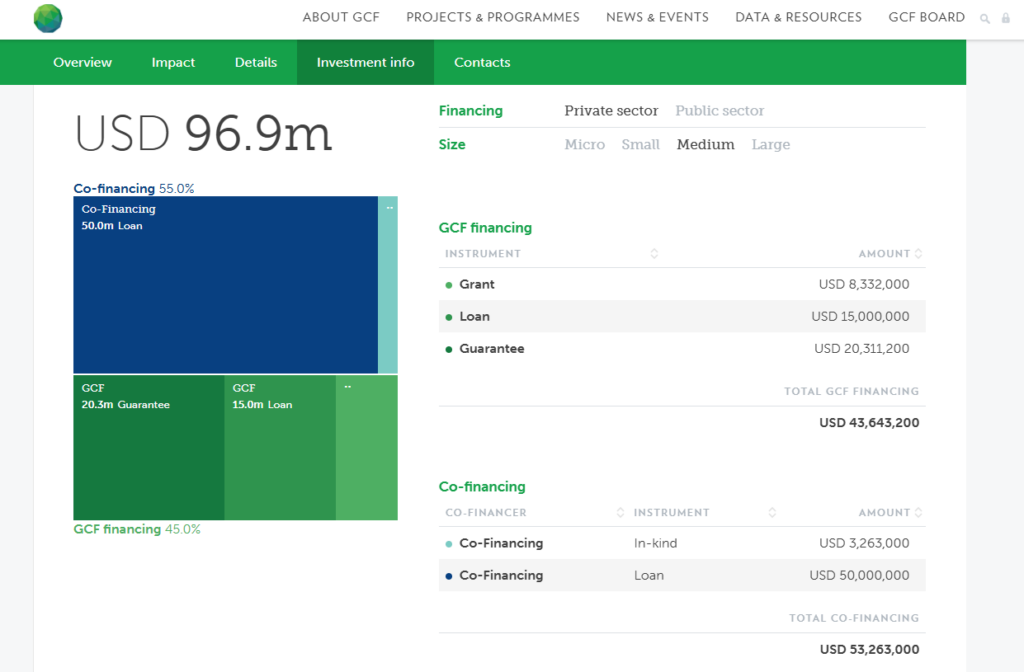
Source: (GCF Project FP292 — greenclimate.fund/project/FP292)
It is a significant milestone for Kenya’s climate finance landscape, building on KCB’s 2020 accreditation as the first private financial intermediary in East Africa to access GCF capital directly.
The announcement landed with fanfare. And it deserved it. But it also surfaces a harder question: if the capital channel is open, what exactly flows through it? More importantly, why is that flow still not reaching the enterprises and communities most affected by climate change?
The system has solved capital access. It has not solved deployment.
In fact, the $96.9 million facility is explicitly designed to address that gap by extending climate finance to MSMEs and smallholder farmers who are typically excluded from traditional lending. But design does not guarantee deployment. It still depends on whether a pipeline of enterprises exists that can absorb and use that capital effectively.
Kenya’s position in the GCF system is substantive. KCB Bank Kenya and NEMA are both accredited direct access entities. KCB, as a private sector intermediary, and NEMA, as a national public entity, give Kenya domestic institutional channels for GCF capital that most African countries do not have. According to the GCF Open Data Library, Kenya has 27 funded activities approved by the GCF, with $493 million in GCF financing allocated, the highest in Africa.
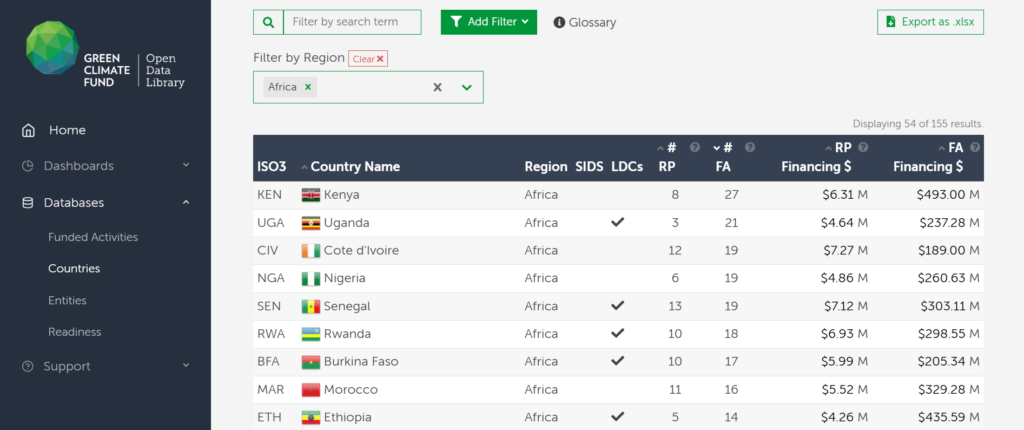
Source: (GCF Open Data Library, accessed April 2026).
That is a serious position. But the harder question is what happens next.
Kenya has built the institutional architecture for GCF access more effectively than any country in Africa. The accreditation is in place. The NDA is functional. The funding proposals are getting approved. What the architecture does not solve and was never designed to solve is the challenge that sits below it: originating and preparing the enterprises and sub-projects that an on-lending facility like FP292 actually needs to deploy to.
This distinction matters. FP292 is not a project. It is a financing channel structured across a grant, a concessional loan, and a guarantee to flow through KCB to MSMEs and smallholder farmers adopting climate-smart technologies. To deploy it, KCB needs a large, well-screened pipeline of enterprises and sub-projects in climate-smart agriculture, clean cooking, waste management, circular economy, and energy efficiency; sectors where it must assess the solvency, financial health, and credit-readiness of every borrower, in accordance with its Accreditation Master Agreement (AMA) with the GCF.
That pipeline does not yet exist at the scale required for deployment through the banking system. And the reasons are structural.
Why is the sub-project pipeline a constraint?
The GCF architecture gives KCB a clear role: prepare and submit funding proposals, conduct due diligence, manage executing entities, and maintain financial accountability across the project lifecycle. That is what the AMA requires. What AMA does not and cannot require is that KCB also originate the enterprises that need to borrow. Those are two fundamentally different functions. One is institutional fund management. The other is market development.
The enterprises FP292 targets operate in sectors where the gap between a viable business idea and a bankable borrower is wide. Climate-smart agriculture enterprises in Kenya are largely early-stage, operating on thin margins, with limited collateral and unproven revenue models. Circular economy and waste management businesses face fragmented markets and inconsistent offtake. Clean cooking enterprises depend on behaviour change at the household level before they can demonstrate the customer volumes a lender needs to see.
These are not unbankable sectors. But they require deliberate pre-structuring work: financial modeling, revenue validation, and capital structure design, before they can clear KCB’s own credit thresholds, which the AMA requires KCB to maintain.
That pre-structuring work is not KCB’s function. It is not what the GCF accreditation system was built to deliver. It sits upstream of both, in a gap that the current architecture leaves open.
However, AMA does provide a structural entry point. KCB can channel GCF funds to third-party Executing Entities, and those entities can play an active role in implementation. A pipeline origination partner operating as an Executing Entity, identifying enterprises, pre-structuring their financials, and delivering investment-ready opportunities into KCB’s credit process, fits precisely within that mechanism. It is not a workaround. It is how the system is designed to work.
The appetite exists. The pipeline does not.
KCB grew its green lending portfolio from 15% to 25% of its loan book between 2023 and 2025, assessing KES 578.3 billion in loans for environmental and social risks. This brings its cumulative Environmental and Social Due Diligence (ESDD) total past KES 1 trillion since 2020. That growth reflects serious institutional commitment. But it was built primarily through environmental and social risk assessment of existing borrowers, not net-new green enterprise origination.
FP292 requires net-new green enterprise origination, not just risk assessment of existing borrowers. However, the infrastructure for origination does not yet exist at the scale the facility demands.
The concessional structure of FP292 changes the risk-return calculus for both KCB and MSME borrowers. The GCF guarantee and concessional loan reduce the bank’s effective risk on sectors it might otherwise price out of reach. But that calculus only holds if the enterprise pipeline exists to lend to.
Across Africa, private sector finance accounts for just 18 percent of total climate flows, the lowest share of any region globally. (CPI, Landscape of Climate Finance in Africa 2024). The constraint is not the appetite for green lending. It is the absence of investment-ready opportunities at the enterprise level.
Closing this gap is not conceptual. It is operational.
The infrastructure needed to close this gap is specific.
It means systematic identification of enterprises in the sectors FP292 covers.
It means pre-structuring work that translates early-stage businesses into credit-ready borrowers, with defensible revenue models, validated capital needs, and risk profiles that can withstand KCB’s due diligence.
It means blended finance architecture that sequences concessional support to bring enterprises across the bankability threshold before they enter the bank’s credit process.
That infrastructure requires sectoral depth, on-the-ground enterprise relationships, and a precise understanding of where KCB’s credit process begins, so that what arrives at that threshold is ready for it.
It is not advisory. It is not training.
It is origination: building what the bank needs before the lending starts.
KCB holds GCF accreditation. It has the balance sheet, the mandate, and now an approved USD 96.9 million facility (FP292). The missing piece is the enterprise pipeline that makes deployment possible. That pipeline exists to be built, and the structural mechanism to build it, within the GCF architecture, is already in place.
AfriCGE | Africa Center for Green Economy is a pan-African pipeline origination and pre-structuring platform active across East Africa. Its work sits precisely in the gap this article describes: identifying enterprises in sectors where climate finance is available but pipelines are thin, assessing their fundability, and structuring their capital needs into investment-ready form – before they enter a bank’s credit process.
If you are working on this problem from either side, origination or deployment, we are already working on this problem in-market, structuring the enterprise pipelines required for deployment.
Climate Finance & Enterprise Development Associate — East Africa Hub
AfriCGE | African Centre for a Green Economy
Finance & Markets Policy Lead – Africa
Green Finance Hub | Climate Policy Intelligence & Advisory Group (CPIAG)